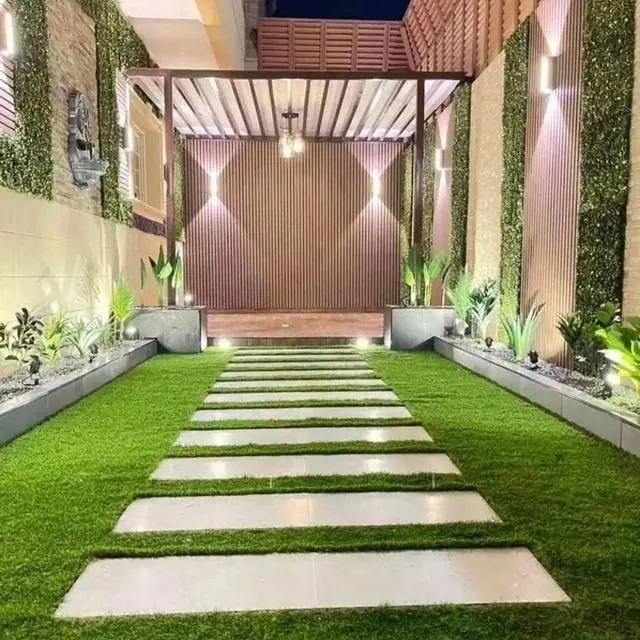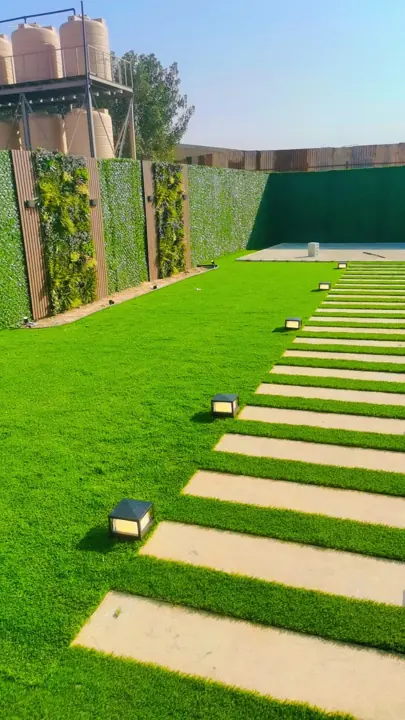
One of the questions we hear most: should I install artificial or natural grass? The answer depends on how you use your garden, your time, and your maintenance budget. Here's the practical difference.
Watering
In Kuwait's summer, natural grass needs watering almost every day, sometimes twice, to keep its colour. Artificial grass needs no watering, just an occasional rinse to remove dust.
Maintenance
Natural grass needs regular mowing, feeding and checks for pests and dry patches. Artificial grass is simple: clear leaves and brush the fibres up where people walk a lot.
Heat and feel
Natural grass is cooler underfoot and smells fresh, which is a real advantage. Artificial grass heats up in direct sun; shade, a pergola, or a quick spray of water before sitting out all help.
Looks all year round
Artificial grass keeps the same colour all year. Natural grass can yellow in patches with heat or under-watering, but when well looked after it gives a look nothing else matches.
When we suggest each
- Artificial: you want a garden that's ready all year without watering, for roofs and small yards, or if you travel often.
- Natural: you have a large space, time or help for maintenance, and love the natural feel and coolness.
- A mix: artificial grass where people sit and walk, with natural plants and planters around it.
One last tip
Whichever you choose, the preparation underneath decides how long it lasts and how it looks: levelling, drainage and edge finishing. If you're unsure, we'll visit and suggest what fits.